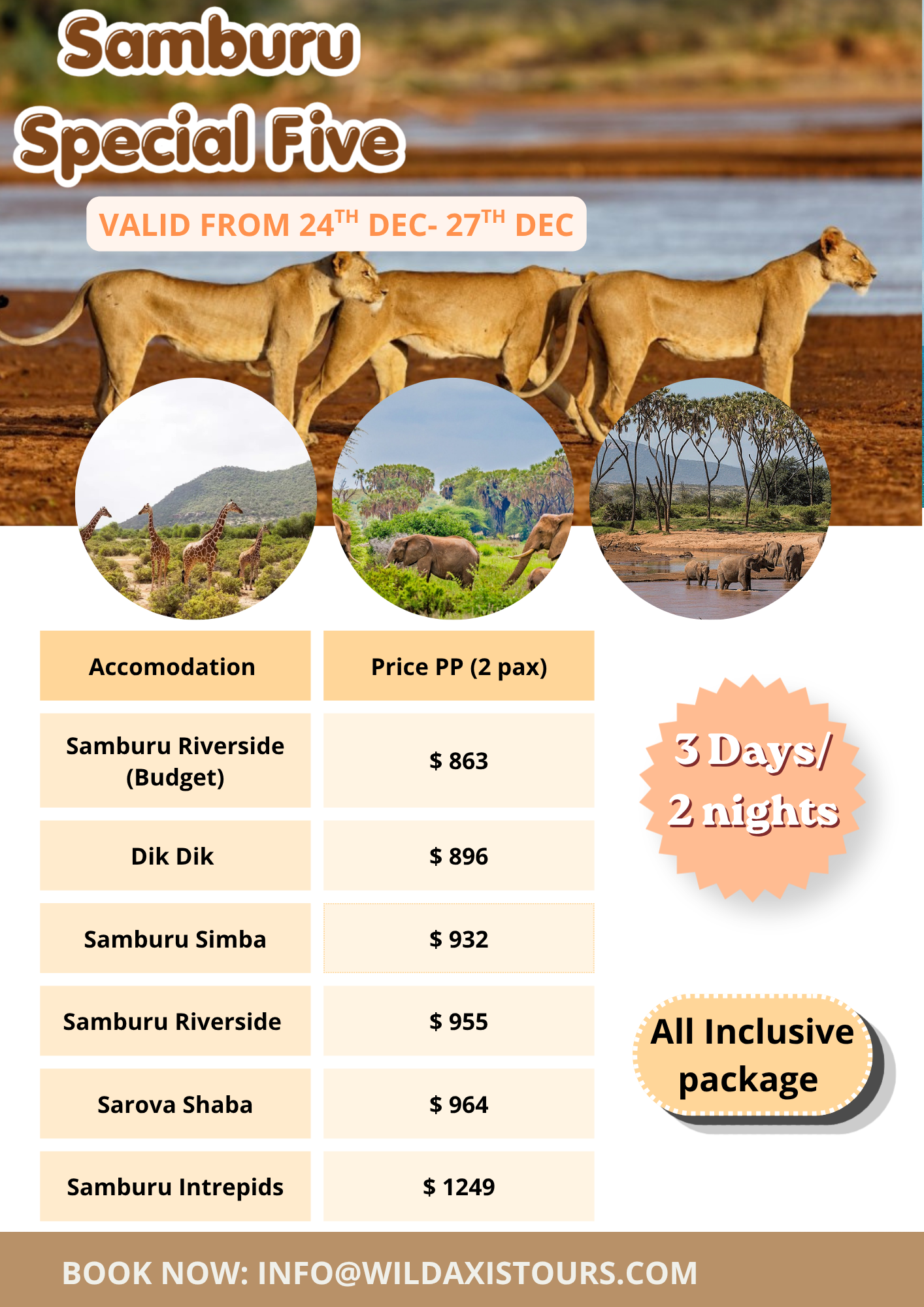
Most safari-goers arrive in Kenya chasing the Big Five — lion, leopard, elephant, buffalo, and rhino. But head north into the semi-arid landscapes of Samburu National Reserve, and you'll encounter a different, equally fascinating set of animals: the Samburu Special Five. Found almost exclusively in this rugged corner of Kenya, these five species are a major reason wildlife enthusiasts and photographers make the journey north.
What Is the Samburu Special Five?
The Samburu Special Five refers to five species uniquely adapted to the arid and semi-arid ecosystems of northern Kenya, rarely seen in the country's more famous southern parks like the Maasai Mara.
1. Grevy's Zebra The largest and most endangered of the zebra species, the Grevy's zebra is instantly recognizable by its narrower stripes, larger rounded ears, and white belly. Unlike the more common plains zebra, Grevy's zebra are found only in small, fragmented populations across northern Kenya and parts of Ethiopia.
2. Reticulated Giraffe With its striking, sharply defined geometric coat pattern, the reticulated giraffe is one of the most photogenic animals in Samburu. It differs visibly from the Maasai giraffe found further south, whose patches are more jagged and less clearly outlined.
3. Somali Ostrich Distinguished by its blue-grey neck and legs (rather than the pink hue of the common ostrich), the Somali ostrich is a striking, unmistakable sight against Samburu's dry, open terrain.
4. Gerenuk Perhaps the most unusual of the five, the gerenuk is a long-necked antelope famous for standing upright on its hind legs to browse leaves other animals can't reach — a behavior that makes for one of the most memorable safari photographs you can capture.
5. Beisa Oryx With its bold black-and-white facial markings and long, straight horns, the Beisa oryx is beautifully adapted to Samburu's dry climate, capable of surviving extended periods with minimal water.
Why Samburu Is Worth Adding to Your Kenya Safari
Unique wildlife you won't encounter in the Maasai Mara or Amboseli Dramatic, rugged scenery along the Ewaso Nyiro River, a lifeline for wildlife in the arid north Strong predator sightings, including lion, leopard, and cheetah, plus the reserve's famous elephant herds Rich Samburu culture, with opportunities to visit local communities and learn about their traditions Fewer crowds compared to Kenya's more heavily visited southern circuit
Best Time to Visit Samburu
- June to October (Dry Season): Wildlife concentrates around the Ewaso Nyiro River, making sightings easier
- January to February: Another good dry-season window with pleasant temperatures
- March to May & November (Rainy Seasons): Lush scenery and excellent birdlife, though wildlife is more dispersed
Combining Samburu With Other Kenya Destinations Samburu pairs well with:
- Maasai Mara — for a "Special Five meets Big Five" combined itinerary
- Mount Kenya — for travelers combining wildlife with a trekking adventure
- Lake Nakuru or Amboseli — to round out a broader northern-and-southern Kenya safari circuit
Final Thoughts
If you've already ticked off the Big Five, the Samburu Special Five offers a compelling reason to venture further north. With its striking landscapes, rare wildlife, and rich Samburu culture, this reserve rewards travelers looking for something a little different from the classic Kenya safari circuit.
Ready to add Samburu to your Kenya itinerary? [Get in touch with the Wild Axis Safaris team] to build a custom safari featuring the Special Five.