Planning a safari in Kenya? One of the most common questions we get from travellers is: how much does it cost to enter Kenya's national parks? The answer matters more than ever right now — because park fees have just gone through their biggest overhaul in nearly two decades.
Here is your complete, up-to-date guide to Kenya national park entry fees, who pays what, and how your fees contribute to conservation.
What Changed in October 2025?
In late September 2025, the Kenya Wildlife Service (KWS) gazetted new park entry fees under the Wildlife Conservation and Management (Access and Conservation) (Fees) Regulations, 2025 — the first major revision since 2007. The new rates took effect on 1 October 2025.
The increase was significant: depending on your visitor category and the park, fees rose by between 80% and 160%. KWS described the revision as necessary to fund rising conservation costs, anti-poaching patrols, infrastructure upgrades, and climate-related restoration work across Kenya's protected areas.
It is worth noting that these fees do not change every year. The previous rates had held for nearly 18 years, so once the current structure settles, travellers can expect it to remain in place for some time.
How Are Visitors Categorised?
KWS charges fees based on four visitor categories. Knowing which one applies to you — and having the right documentation at the gate — is essential.
- East African Citizens are nationals of Kenya, Uganda, Tanzania, Rwanda, and Burundi. Kenyan citizens present a valid National ID; others present their passport. These visitors pay the lowest rates, in Kenyan Shillings (KES).
- Kenya Residents are non-EAC nationals living in Kenya with valid documentation such as a work permit or appropriate visa. Rates are slightly higher than citizen rates, still in KES.
- African Citizens are nationals of any other African country, not covered under the EAC bloc. Fees are charged in US Dollars.
- Non-Residents are all other international visitors — the majority of overseas tourists arriving on a tourist visa. These visitors pay the highest rates, charged in US Dollars.
Children's rates apply to those aged 3–17 years (or 3–11 in some parks), at roughly half the adult rate. Children under 3 (or under 5 in some parks) enter free.
Fees by Park (2026 Rates)
Maasai Mara National Reserve
The Mara sits in its own category because it is managed by the Narok County Government, not KWS directly. It is also the most expensive reserve in Kenya — and one of the most visited wildlife destinations in the world.
Fees are charged per person per 12-hour period (6 am to 6 pm), not per 24 hours. For non-resident adults, the rate is USD 100 per day from January to June 2026, rising to USD 200 per day from July 2026 onwards (the peak migration season). Children aged 9–17 pay USD 50 per day; children 8 and under enter free.
East African citizens and residents pay substantially lower rates in KES, making the Mara accessible for local travellers.
Amboseli National Park
One of Kenya's most iconic parks — famous for large elephant herds set against the backdrop of Mount Kilimanjaro — Amboseli is classified as a Premium Park under the 2025 KWS structure.
Non-resident adults pay USD 90 per person per 24 hours. East African citizens pay KES 1,500 per adult. Kenya residents pay KES 2,000 per adult. Children pay approximately half the adult rate. There is no high/low season distinction for KWS parks — the rate is flat year-round.
Tsavo East and Tsavo West National Parks
Together, Tsavo East and Tsavo West form one of the largest wildlife ecosystems in Africa. They are classified as Wilderness Parks and share the same pricing.
Non-resident adults pay USD 80 per person per 24 hours. East African citizens pay KES 1,000 per adult. Kenya residents pay KES 1,350 per adult. Children aged 3–17 pay half the adult rate; children under 5 enter free.
Even after the 2025 increases, Tsavo remains one of the best-value safari parks in East Africa — significantly cheaper than the Mara and comparable to Tanzania's Serengeti.
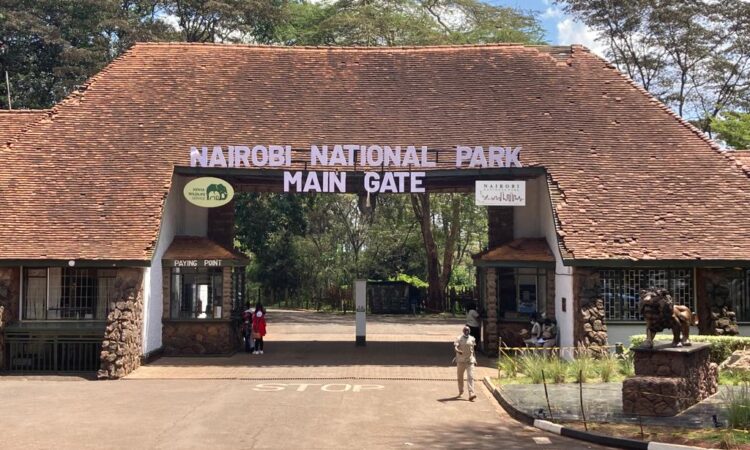
Nairobi National Park
Nairobi National Park is classified as an Urban Park and offers one of the most unique wildlife experiences in the world — lion, buffalo, rhino, and giraffe roaming freely with the city skyline as a backdrop.
Non-resident adults pay USD 80 per person per 24 hours. East African citizens pay KES 1,000 per adult. Kenya residents pay KES 1,350 per adult. This is a notable increase from the previous rate of USD 43 for non-residents, reflecting the park's central location and high visitor demand.
For those wanting to combine Nairobi National Park with the Nairobi Safari Walk and Animal Orphanage, a bundled Nairobi Package is available at USD 105 for non-residents, USD 55 for African citizens, KES 1,750 for Kenya residents, and KES 1,300 for East African citizens.
Lake Nakuru National Park
Lake Nakuru is a Premium Park known for its flamingo-draped shoreline and one of East Africa's most successful rhino sanctuaries.
Non-resident adults pay USD 90 per person per 24 hours. East African citizens pay KES 1,500 per adult. Kenya residents pay KES 2,000 per adult. Fees are flat year-round with no seasonal variation.
Hell's Gate National Park
Hell's Gate is a Scenic Park and is especially popular for cycling, hiking, and rock climbing — the only KWS park where you can move around on foot or by bicycle without a vehicle.
Non-resident adults pay USD 60 per person per 24 hours. East African citizens pay KES 600 per adult. It remains one of the most affordable parks for all visitor categories.
Samburu National Reserve
Samburu is managed at the county level and is best known for rare northern species: reticulated giraffe, Grevy's zebra, Somali ostrich, and the gerenuk.
Non-resident adults pay USD 85 per person per 24 hours. Children pay USD 40 per day. East African citizen and resident rates apply in KES.
Combination Park Packages
KWS offers bundled packages for visitors planning to visit multiple parks in one trip — and these can offer genuine value.
- Tsavo East + Tsavo West: KES 2,000 (East African citizen) / USD 150 (non-resident)
- Tsavo West + Amboseli: KES 2,200 (East African citizen) / USD 150 (non-resident)
- Tsavo East + Tsavo West + Amboseli: KES 3,000 (East African citizen) / USD 215 (non-resident)
These packages are well worth considering for a southern circuit safari where you plan to move between parks.
Additional Charges to Budget For
Park entry fees are not the only cost to factor into your safari budget.
- Vehicle fees apply at most KWS parks. Vehicles with fewer than 6 seats typically pay around KES 600. Larger vehicles are charged separately. Many all-inclusive safari packages absorb vehicle fees into the overall price — confirm this with your operator.
- Camping fees are charged per person per night, on top of entry fees. Rates vary by campsite and visitor category.
- Conservancy fees apply separately if your lodge or camp is located within a private conservancy (such as the Olare Motorogi, Mara North, or Naboisho conservancies adjacent to the Maasai Mara). These fees typically range from USD 60 to USD 150 per person per day and go directly to supporting local Maasai communities and conservation work on private land.
- Balloon safari surcharges at the Maasai Mara typically add around USD 50 on top of standard park fees.
- Airstrip landing fees of USD 15–20 per person apply at most park airstrips for fly-in safaris.
How to Pay
All KWS national park fees are paid cashless through the KWSPay system on the eCitizen portal (ecitizen.go.ke). No cash payments are accepted at park gates.
To pay, create an eCitizen account, select National Park Entry, choose the correct park and visitor category, and complete payment by credit card, debit card, or M-Pesa. Your ticket is valid for 24 hours from the time of entry.
When booking with us, park fees for KWS-managed parks are included in your safari package and handled on your behalf — you will not need to navigate the portal yourself.
For the Maasai Mara, payment is processed through the Narok County eTIMS system; again, this is typically managed by your tour operator.
Why Do Park Fees Exist?
Every shilling and dollar paid at Kenya's park gates goes toward something tangible: ranger salaries and anti-poaching patrols, road and infrastructure maintenance inside parks, wildlife veterinary care, conservation programmes for endangered species like black rhinos and wild dogs, and community development projects for communities that live alongside wildlife.
Kenya's parks have not raised their fees meaningfully since 2007. Over that period, the cost of running a ranger patrol, maintaining a water borehole, or flying a wildlife vet to a poaching incident increased dramatically. The 2025 revision is designed to close that gap and ensure Kenya's extraordinary natural heritage can be sustained for the next generation of travellers — and for the communities and wildlife that depend on it.
Even with the 2025 increases, Kenya remains competitively priced as a safari destination. Tsavo is on par with Tanzania's Serengeti. Amboseli, with Kilimanjaro as a backdrop, is accessible at USD 90. The Maasai Mara in peak season is premium, but the Great Migration it hosts is among the greatest wildlife spectacles on earth.
Plan Your Safari with Confidence
Navigating park fees, seasonal timing, and visitor categories can feel complicated — especially when regulations are evolving. That is exactly why working with a knowledgeable local tour operator matters.
When you book with us, we handle all park entry payments, build accurate fees into your itinerary budget, and keep you informed of any changes before your departure. Your job is simply to show up and enjoy Kenya's extraordinary wildlife.
Get in touch with our team to start planning your safari today.
📧 wildaxistours@gmail.com
📞 +254740243341
🌐 www.wildaxisafrica.com