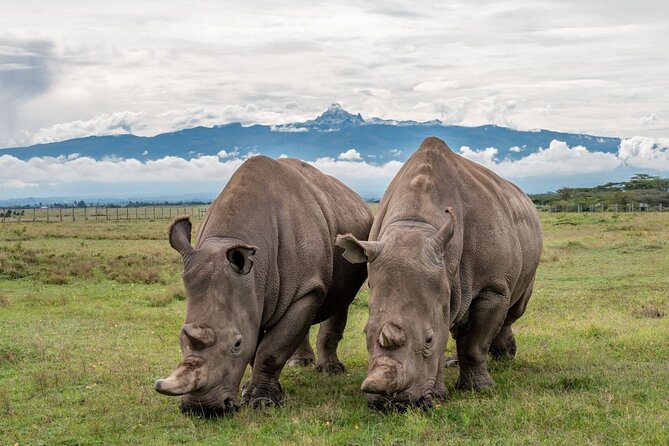
In a secure enclosure in Kenya's Laikipia region live two rhinos named Najin and Fatu. They are, as far as science can confirm, the only northern white rhinos left on Earth. When you visit them at Ol Pejeta Conservancy, you're not just seeing an animal — you're witnessing the final chapter of a subspecies, and directly funding the effort trying to write a different ending. Here's what makes Ol Pejeta one of the most meaningful stops on a Kenya safari, and why 2026 is a genuinely significant year to visit.
Who Are Najin and Fatu?
Najin and Fatu are a mother-daughter pair, and the last two northern white rhinos in existence. The subspecies once ranged across parts of Uganda, Chad, Sudan, the Central African Republic, and the Democratic Republic of the Congo, but decades of poaching and civil war pushed it to the edge — and then over it.
The last male, Sudan, lived out his final years at Ol Pejeta and died in 2018, leaving Najin and Fatu as the entire remaining population of their kind. Neither female is able to carry a pregnancy naturally, which means the subspecies is functionally extinct in the wild. That single fact is what makes the science happening at Ol Pejeta right now so remarkable.
The Science Trying to Save a Subspecies Since 2019, an international consortium — including Ol Pejeta, the Kenya Wildlife Service, and reproductive scientists from Europe — has been running one of the most ambitious rescue efforts in conservation history: creating northern white rhino embryos in a lab and implanting them into closely related southern white rhino surrogates. This is not a settled success story yet. Several embryo transfers into surrogate mothers have not resulted in a long-term pregnancy so far, and the team continues refining the process, including introducing new surrogate candidates into the program.
But progress is ongoing: at the start of 2026, scientists successfully retrieved a new egg cell from Fatu, producing another viable embryo — one more attempt in a process that inches the project closer to what would be one of the most significant conservation achievements ever recorded, if it ultimately succeeds.
Every visitor who pays to see Najin and Fatu at Ol Pejeta contributes directly to funding this work. It's Not Just About Two Rhinos Ol Pejeta's rhino story goes well beyond the northern white rhinos. The conservancy is the largest black rhino sanctuary in East Africa, protecting over 160 critically endangered black rhinos — a population it has grown from just four animals in the late 1980s. That kind of turnaround doesn't happen by accident: it's the result of a dedicated Rhino Protection Unit, a specialized anti-poaching K-9 unit, and motion-sensor cameras built into the conservancy's solar-powered electric fencing.
Ol Pejeta is also the only place in Kenya where you can see chimpanzees, thanks to the Sweetwaters Chimpanzee Sanctuary — a rescue and rehabilitation facility run in partnership with the Jane Goodall Institute for orphaned and rescued chimps from across Central and West Africa.
What a Visit to Ol Pejeta Actually Looks Like Ol Pejeta sits roughly 3.5–4.5 hours from Nairobi by road, making it an accessible add-on to a Laikipia or northern Kenya itinerary rather than a far-flung detour. Highlights typically include: Guided visits to the Endangered Species Enclosure, where you can see Najin and Fatu at a safe, respectful distance Rhino tracking on foot with armed rangers, following black rhinos in their natural habitat Night drives for a chance at nocturnal predators you won't see on a standard daytime game drive
Sweetwaters Chimpanzee Sanctuary visits Big Five game drives, alongside rarer sightings like Grevy's zebra and African wild dogs Because Ol Pejeta caps visitor density more tightly than some of the more crowded parks, it tends to deliver a quieter, more intimate wildlife experience — even during busier safari seasons.
Why This Matters for How You Choose a Safari A lot of conservation messaging in travel can feel abstract — vague language about "giving back" without much specificity. Ol Pejeta is one of the rare cases where the connection between your visit and the outcome is direct and traceable: entry and activity fees fund rhino protection units, anti-poaching technology, and a genuinely unprecedented scientific effort. Choosing to include it in your itinerary isn't just a good wildlife experience — it's a measurable vote for what that money goes toward. Plan a Kenya Safari That Includes Ol Pejeta
We build Ol Pejeta into Laikipia-focused itineraries alongside conservancies like Lewa and Loisaba, so you can experience northern Kenya's conservation landscape in depth rather than as a rushed day trip.
Get in touch to start planning a trip that puts conservation at the center of your Kenya experience.
Frequently Asked Questions
How many northern white rhinos are left in the world?
Two — Najin and Fatu, a mother-daughter pair living at Ol Pejeta Conservancy in Kenya. Neither can carry a pregnancy naturally, so scientists are working to save the subspecies through lab-created embryos implanted in southern white rhino surrogates. How far is Ol Pejeta Conservancy from Nairobi? Approximately 3.5 to 4.5 hours by road, making it a practical addition to a northern Kenya or Laikipia safari itinerary.
Can you see chimpanzees in Kenya?
Yes — Ol Pejeta's Sweetwaters Chimpanzee Sanctuary is the only place in Kenya where visitors can see chimpanzees, most of them rescued from other parts of Central and West Africa. Does visiting Ol Pejeta actually help conservation? Yes. Visitor fees for activities like the Endangered Species Enclosure visit go directly toward funding rhino protection units, anti-poaching technology, and the ongoing scientific program working to save the northern white rhino subspecies.
Visit https://www.wildaxisafrica.com/tours/nairobi-lake-nakuru-and-olpejeta-safari to book your safari to Ol Pejeta. wildaxistours@gmail.com